
Himaya: On Experimentation, Material Science, and Unpredictability
- May 10
- 3 min read
In a practice where tradition meets scientific inquiry, color becomes less of a fixed outcome and more of an evolving conversation between material, environment, and time. For Mariton Villanueva, founder of Himaya by Mariton Villanueva, botanical dyeing is not simply a craft rooted in heritage, but a living laboratory where experimentation and unpredictability shape every result.
Her process begins with research. References like Gampol, a documentation of traditional Philippine dye plants, serve as an entry point, alongside independent exploration of dyeable flora found online and in nature. But research is only the beginning. The real work unfolds in the studio, where plant materials are tested against different fabrics, mordants are adjusted, temperatures are shifted, and timing is constantly refined.
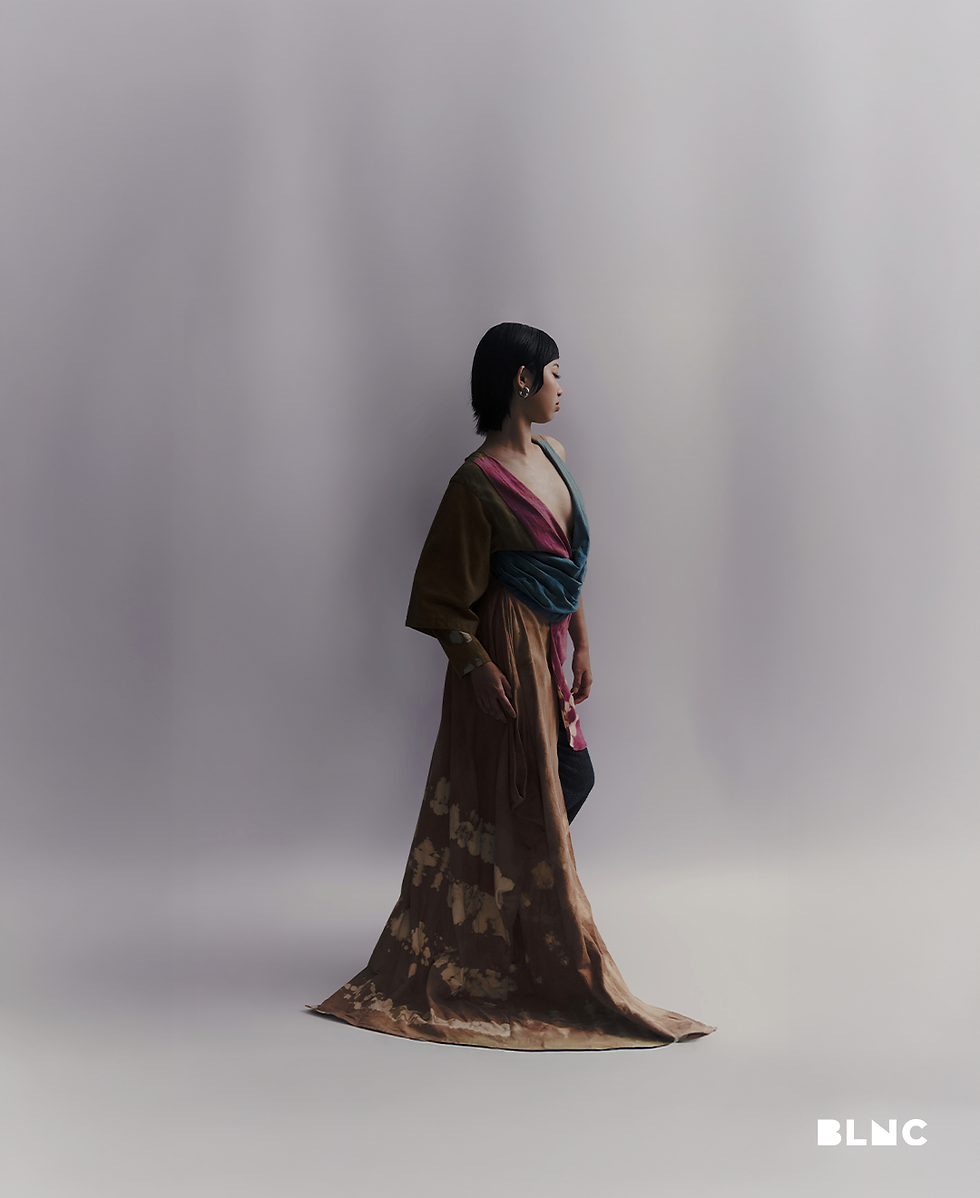
Each variable matters. A slight change in heat can alter a hue entirely. A different mordant can push a color toward something unexpected. Even the same plant may yield different results depending on when it was harvested or how it was processed. In this space, chemistry is not abstract—it is immediate and visible, expressed through pigment, fiber, and reaction.
There is structure in the science, but there is also uncertainty that cannot be fully controlled. Rather than resisting this, Mariton embraces it. Unpredictability becomes part of the method, not a disruption to it. It keeps the practice responsive, reminding her that color is never static and never fully owned.


On Working Independently and Building Toward Collaboration
Operating as a one-woman studio under Himaya by Mariton Villanueva means moving through every stage of production, from sourcing materials to dyeing, sampling, construction, and creative direction. This level of involvement naturally shapes how decisions are made.
Each choice is grounded in process. Material behavior, production timelines, and the realities of craftsmanship are always part of the equation. The work demands attention to detail at every step, and with that comes a deep understanding of how each part connects to the next.
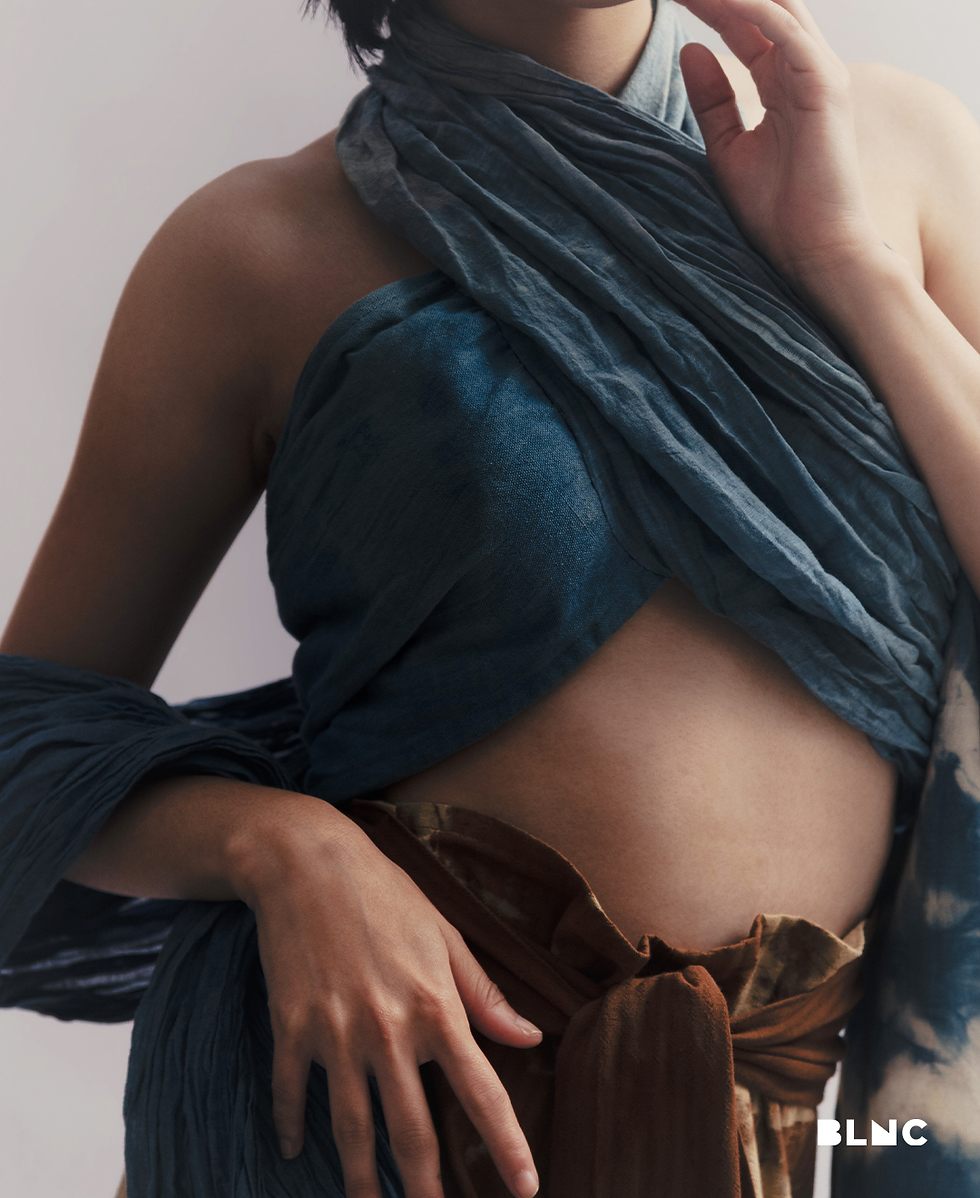

While the responsibility can be heavy at times, it also brings clarity. There is no separation between concept and execution. Everything is experienced firsthand, from the first immersion of fabric into dye to the final form of the garment.
Still, this independence is not seen as a fixed condition. Collaboration is an essential part of her long-term vision. Mariton speaks about working with skilled artisans—particularly weavers and mananahi—as a natural extension of the practice. For her, textile work is not meant to exist in isolation. It thrives in shared environments where knowledge is exchanged and craftsmanship is collective.
The goal is not to remain alone, but to grow into a more interconnected system of making—one where each contributor brings their own expertise into the process.

On Responsible Practice Beyond the Aesthetic of Sustainability
Natural dyeing is often framed through a romantic lens, associated with purity, tradition, and ecological harmony. But for someone working directly with both plant materials and chemical processes, the reality is more complex.
Sustainability, in Mariton Villanueva’s practice through Himaya by Mariton Villanueva, is not defined by aesthetic ideals. It is defined by responsibility.

Working with natural dyes does not automatically mean a process is free from impact. It requires careful consideration of sourcing, scale, and extraction. She emphasizes the importance of using locally available plants and being mindful of how much is harvested, recognizing that even natural resources can be depleted if handled without restraint.
At the same time, she is clear that dyeing is still chemistry. Plant-based pigments interact with mordants and fibers through chemical reactions that must be understood and respected. Rather than framing natural dyeing as “pure,” she approaches it as a material system that requires both knowledge and accountability.


For her, responsible production is not about achieving an idealized version of sustainability. It is about making informed decisions at every stage—working slowly, respecting materials, and engaging ethically with the people involved in production. It is a continuous process of awareness rather than a final state of perfection.
In this way, Himaya by Mariton Villanueva challenges simplified narratives around craft and sustainability, offering instead a grounded perspective where experimentation, science, and responsibility exist in constant dialogue.
Designer: Mariton Villanueva
Photographer: Meinard Navato
Makeup artist: Jana Dela Cruz
Model: Zaira Yuki Midoro
Instagram Handles:
@vmariton
@mpnavato
@janafiedd
@zairayukii


Comments