
FACETS: Cheska Torres Ibasan
In a digital world that often pushes creators toward trends and quick visibility, Cheska Torres Ibasan chooses a quieter path—one rooted in reflection, cultural memory, and the layered realities of Filipino identity. Her work moves through the spaces in between: between softness and strength, heritage and reinvention, solitude and community. Rather than trying to define what it means to be Filipino in a single frame, she leans into the complexity of it, allowing contradiction, tenderness, and truth to exist side by side.
Through storytelling, design, and her fashion line KADIWA The Label, Ibasan explores how culture lives in everyday gestures, inherited values, and the subtle moments that often go unnoticed. Her perspective is shaped by lived experience—from navigating identity within the diaspora to reexamining faith, belonging, and the quiet power of collective care. In this conversation with BLNC Magazine, she reflects on the roots that ground her work, the communities that shaped her voice, and why embracing ambiguity may be the most honest way to understand Filipino identity today.

Your content feels deeply rooted in Filipino identity. What parts of who you are show up most naturally when you create?
I come from a place where survival and imagination lived side by side, so what shows up most naturally in my work is truth. Being Filipino means holding joy and struggle at the same time, and I think that duality shapes my voice. I’m drawn to nuance, to honoring softness and strength together, and to creating space for stories that don’t always get centered. I also gravitate towards complexity: the quiet moments, the contradictions, the tenderness that exist alongside ambition or pressure. I bring a lot of emotional intuition into my work, and I think that comes from listening—listening to the women in my life, to inherited stories, to what it means to belong and still feel like you’re defining yourself. So when I create, I’m not trying to represent everything about being Filipino perfectly; I’m just trying to be truthful. And I believe that honesty is what allows cultural identity—any cultural identity—to shine through naturally.
Growing up Filipino shapes the way we move through the world. What values or experiences from your upbringing continue to guide you today?
For a long time, I took pride in not asking for help—being self-sufficient, keeping things moving on my own, proving that I could carry the weight without leaning on anyone else. It felt like strength. But over time, I began to understand that what I’d grown up around was something deeper: bayanihan. Not independence at all costs, but collective care.
Learning to accept help taught me humility and trust. It reminded me that resilience doesn’t always look like doing everything alone; sometimes it looks like letting yourself be held by a community that genuinely wants to see you win. That value stays with me now. It shapes how I show up for others, how I ask for support when I need it, and how I measure success—not by how much I can endure alone, but by how well we move forward together.

A lot of your work highlights quiet, everyday moments. Why are these small details important to you when telling Filipino stories?
These organic, quiet, everyday moments matter deeply in Filipino storytelling because so much of Filipino life exists in the in-between—the pauses, the routines, the things that don’t announce themselves as dramatic but carry vastness. Quietness doesn’t mean silence; it’s a kind of stillness, a way of just being.
You can’t think of Southeast Asia without the Philippines coming to mind, and yet for many in the diaspora, we’re often told we’re not Southeast Asian enough, not even Asian enough. Those small, intimate moments become a way of asserting presence—of saying we are here, even when our identities are questioned or overlooked.
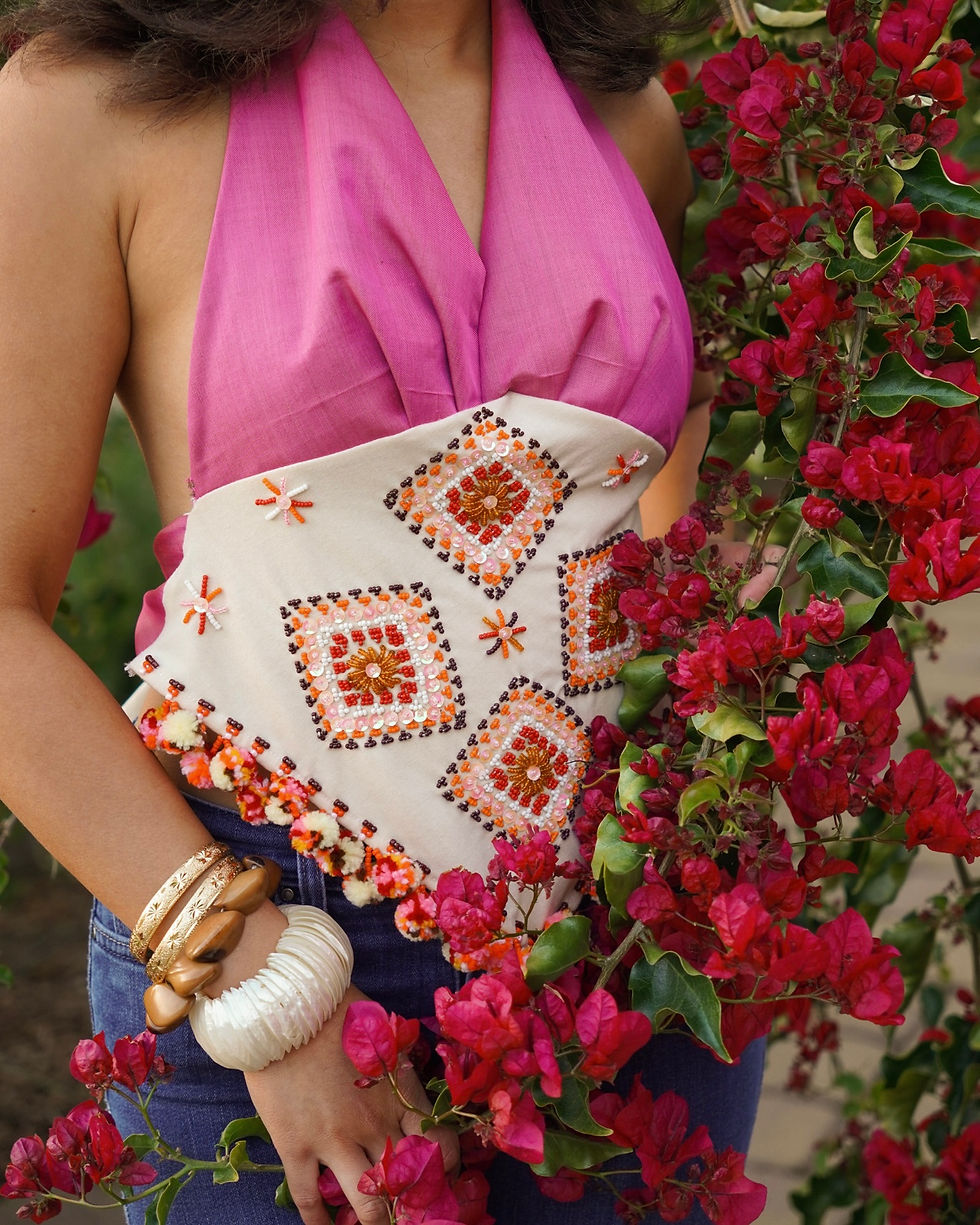
When I created my fashion line — KADIWA The Label — the brand wasn’t immediately legible as “Filipino.” People only recognized it through the product descriptions and infographics I created for each piece. That experience reminded me that so much of who we are exist in nature, in practices, and in the industrialized objects we encounter every day. Often, the response was, “I didn’t know this was Filipino,” or “We have that in our culture too.”
While I believe we are unique in our own way, there is something powerful about that shared recognition. Our stillness—our quiet presence—is not absence. It’s continuity.

In a digital space that often favors global trends, how do you stay grounded in your own cultural perspective?
Cultures have always driven trends—even when they aren’t credited for it. So much of what’s considered “global” today is rooted in specific communities, from music shaped by Black cultures to clothing and silhouettes woven through different Black and brown cultural histories. Remembering that helps me stay grounded.
In a digital space that moves quickly and often flattens context, I try to stay connected to that origin point. I don’t feel pressure to chase what’s popular because I know that cultural specificity is what gives trends their longevity in the first place. By honouring where ideas come from—especially my own—I’m not stepping outside the conversation. I’m participating in it honestly.
What does Filipino identity mean to you now, compared to how you understood it when you were younger?
When I was younger, Filipino identity felt like a list I had to memorize and perform correctly. It was manners, gestures of respect, accents softened or sharpened depending on who was listening. It was something inherited but also something fragile—easy to “lose” if you strayed too far, spoke the wrong way, wanted the wrong things. I understood it as obligation more than choice.
Now it feels less like a checklist and more like a conversation I’m still navigating. Filipino identity has become expansive and unfinished. It lives in contradiction: pride and grief, humor and rage, intimacy and distance. I see it not just in traditions preserved, but in the ways we adapt, survive, and rediscover. It’s in migration and longing, in the ache of loving a country that has failed you and still shapes you. I no longer think of it as something I owe purity to, but something I’m in relationship with—something that changes as I do.
If younger me wanted certainty about being Filipino the right way, current me is more comfortable with ambiguity. Being Filipino now means holding history without being trapped by it, honoring inheritance while interrogating it, and allowing softness where I was once taught endurance was the only virtue.

Has there been a moment when you felt especially proud to be Filipino, either through your work or a personal experience?
I first felt proud to be Filipino in a way that was both fragile and fierce during my undergraduate years at UC Berkeley, where I was part of only 3.4% of students who identified as Filipino. Being in that small number made me notice how often our stories were overlooked, and how Filipino experiences don’t fit neatly into the “model minority” narrative applied to other Asian groups.
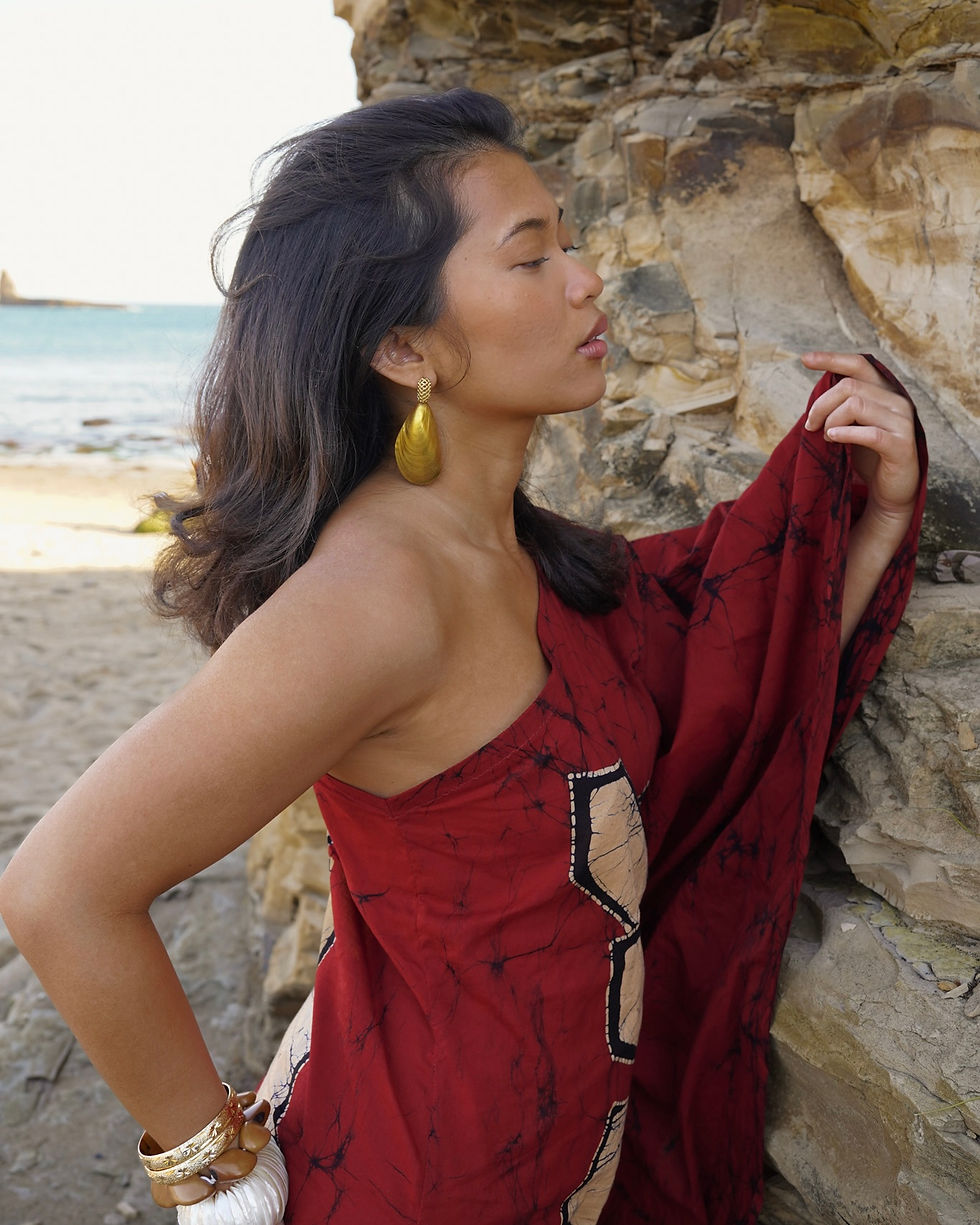
Back then, pride came quietly, in simply existing fully, even when no one expected us to be visible. Today, that quiet pride has a new shape through KADIWA The Label. Bringing Filipino fashion onto a global stage is both humbling and exhilarating—it’s a way of making our creativity, our heritage, and our stories felt beyond the communities that know them best. I hope that in sharing this work, others—especially Black and brown women—can see themselves reflected, empowered, and reminded that claiming space is a beautiful radical act. For me, moving forward, pride is no longer just about surviving visibility; it’s about insisting on presence, honoring ancestry, and showing that Filipino identity, in all its nuance, has a place in the world.
How do family, community, and faith influence the way you see the world and express yourself?
Family, community, and faith are not separate threads for me—they’re braided, and faith in particular is the one I’ve had to slowly, deliberately unlearn and re-learn. Growing up Filipino and Christian, faith was inseparable from family loyalty and communal belonging. God was introduced to me through hierarchy: elders, priests, and authority. Love was often framed as sacrifice without consent, and holiness as silence. For a long time, that shaped how I saw the world—I learned to endure before I learned to discern, to spiritualize suffering instead of naming injustice.
Decolonizing my faith has been integral to my journey because Christianity, as I received it, was never neutral. It arrived wrapped in colonial power and moral control, even as it taught me language for hope, compassion, and transcendence. To remain Christian without interrogation would have meant accepting Jesus as someone who looked too much like an empire that demanded my compliance more than my wholeness. Decolonization, for me, is not abandoning faith but rescuing it—returning to Jesus who stands with the oppressed rather than sanctifying their pain, and reclaiming spirituality as relational, embodied, and liberatory.
This reimagined faith changes how I move through the world. It makes me attentive to power, suspicious of narratives that glorify suffering, and committed to joy as a form of resistance. As a Filipino and a Christian, I now see my expression—my questions, my tenderness, my refusal to shrink—as sacred. Faith no longer disciplines me into obedience; it invites me into responsibility: to my people, to my history, and to a God who is not threatened by my yearning for more or my intellect.

Building something like KADIWA came from a personal place. What did creating it teach you about yourself beyond business or creativity?
Creating KADIWA The Label taught me that my impulse to build has always been about repair. Long before it was a brand or a concept, it was a response to fracture—to the feeling that so much of what I loved about being Filipino existed in fragments: memory without infrastructure, care without visibility, talent without protection. I learned that I don’t create because I’m confident; I create because I’m yearning for coherence. Building became a way of asking, what would it look like to belong on our own terms?
Beyond business or creativity, KADIWA The Label revealed how deeply relational fashion is to me. I’m not motivated by scale as much as I am by intimacy—by trust, by shared language, by the quiet recognition of seeing yourself reflected in something made with care. It taught me that leadership is less about direction and more about stewardship: holding space, translating between worlds, protecting softness in systems that reward extraction.
KADIWA The Label taught me that I carry both the ache of inheritance and the courage to reimagine it—that I am shaped by histories of survival, but not limited to them. In building it, I learned that fashion is an extension of my values, and that my truest measure of success is not growth or recognition, but whether what I build feels honest, communal, and alive.
Who or what shaped your understanding of heritage and belonging while growing up?
My mom shaped my understanding of heritage and belonging in ways both quiet and profound. She was the living archive of our family’s stories, rituals, and resilience—each meal she cooked, each lullaby she hummed, each memory she recalled became a thread connecting me to a lineage I could touch and taste. Through her, I learned that heritage isn’t just history or tradition—it’s a language of persistence that must be spoken, or it risks disappearing.
She also taught me that the harsh truth of belonging is that it is not automatic, but a challenge. Even in her imperfections, she embodied the tension of belonging: how to honor the past while claiming agency over the present. I learned to carry this lesson with me everywhere—from navigating corporate tech, where I present myself professionally without erasing my identity, to moving through social spaces with grace while fully embodying all my identities.
In essence, my mom didn’t just give me heritage—she gave me a template for inhabiting it fully, thoughtfully, and with a love that is both anchored and expansive.
When people engage with your content, what do you hope they feel or recognize about Filipino life and identity?
When people engage with my content, I hope they feel the fullness and expansiveness of Filipino life and identity—not as something exclusive, but as something that resonates across communities. Filipino identity, for me, is rooted in radical joy, togetherness, creativity, and I want those values to be visible in ways that others can recognize and connect with.
Seeing KADIWA The Label take up space in fashion, for example, can be empowering not just for Filipinos but for many women of color who are navigating spaces that haven’t always recognized them. I want people to feel that presence matters—that culture, heritage, and identity are powerful when expressed unapologetically, and that claiming space is itself an act of visibility and affirmation.
Ultimately, I hope people recognize that what is distinctly Filipino can also be universally resonant: it can inspire pride, spark curiosity, and create connections across lines of difference.


Comments