
Tasik: The Quiet Strength of Roda Ignacio
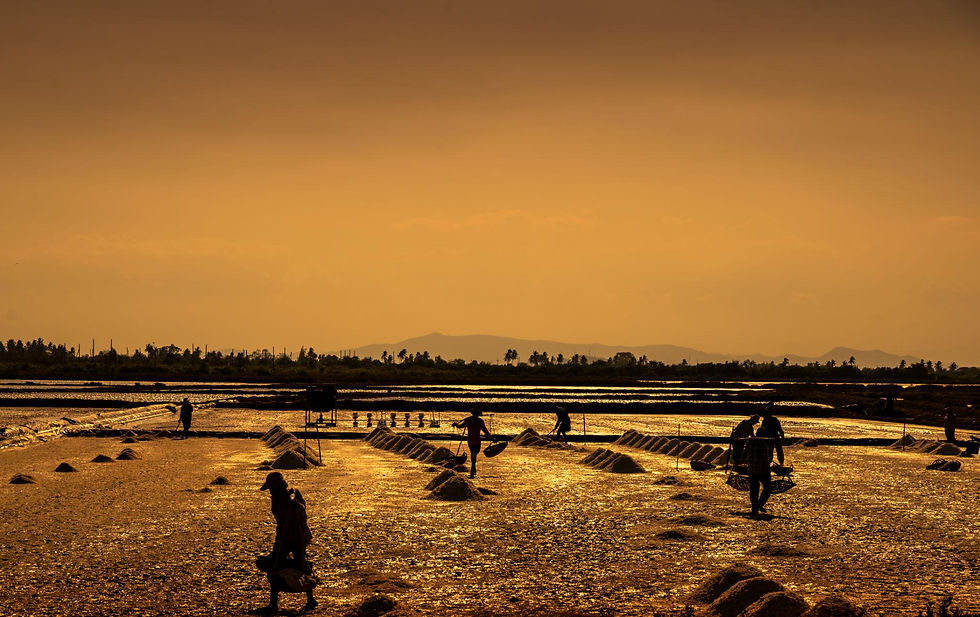
In Pangasinan, where the land itself tells stories through salt, life moves to a rhythm shaped by sun, wind, and patience. For Roda Ignacio, that rhythm began early. The salt farms were not just part of her surroundings, they were her first understanding of the world. As a child, she watched hands carve livelihood out of seawater, learning that behind something as ordinary as salt is a life built on sacrifice, discipline, and care.
“To many, salt is just a seasoning,” she shares. “For us, it’s life itself.”
That life is deeply personal. Each grain carries the memory of her father’s labor, the risks he took to secure land for their family, and the quiet determination that sustained them. What she inherited is more than responsibility. It is a legacy she now carries forward, rooted in both gratitude and pride.

Pangasinan, whose name literally means “where salt is made,” is not just a place Roda calls home. It is part of her identity. It shaped her understanding of culture, resilience, and belonging. “This is where I was formed,” she says. “Not just by the work, but by the values that came with it.” For her, the story of salt farming is also a story of people who remain unseen, despite sustaining entire communities.
There is a tendency to romanticize rural life, to reduce it to quiet landscapes and simplicity. But Roda knows better. Life in the asinan demands patience that cannot be rushed. Salt forms only when nature allows it. Some days, the rain erases hours of labor, and the only choice is to begin again. It is here that she learned resilience, not as a concept, but as a way of life. “Simplicity does not mean ease,” she says. “It means showing up every day, no matter what.”
Of all the roles she carries today, it is motherhood that feels most instinctive. She speaks of it with the same reverence she gives the land. Like tending a salt farm, it requires attention, endurance, and an understanding that the most important work often goes unseen. It has shifted her perspective, deepening her sense of patience and reshaping what truly matters.
But Roda’s story does not end in the fields.

Before returning to the farm, she found another kind of stage. As a theater actress, she discovered a different way of telling stories, one that allowed her to translate lived experience into movement, voice, and emotion. Acting was never just a passion. It became a language. “It was how I expressed not just stories, but parts of myself,” she reflects.
Theater also taught her something that stayed long after the curtain fell: connection. On stage, no one stands alone. Every performance depends on trust, awareness, and shared energy. Offstage, that truth shaped how she understands womanhood. Strength, she believes, is not in standing apart, but in lifting others alongside you.
There was a time when her days were defined by movement. Living in Baguio, she balanced teaching, theater, and preparation for board exams, traveling back and forth to Alaminos City with a singular goal: to bring theater back to her hometown. It was a period marked by exhaustion, but also by purpose. “Ambition and sacrifice make sense when they come from passion,” she says. Even showing up felt like a contribution.
One role remains close to her heart: her performance in Alamat ng Sandaang Pulo, where she played both narrator and the older version of the main character. It was her first major role, taken on during one of the most demanding periods of her life. The pressure was overwhelming. There were moments she wanted to give up. But one line stayed with her: The show must go on. And it did.

Today, that stage feels distant, but not lost.
After giving birth, Roda stepped away from acting, entering a different kind of performance, one without scripts or rehearsals. Motherhood reshaped her relationship with her craft, deepening her emotional awareness and grounding her in a new kind of presence. “I value every moment differently now,” she says. “Time feels more meaningful.”
This pause, often misunderstood, is something she has come to define on her own terms. Progress, for her, is no longer measured by movement forward in a career, but by presence. By choosing to be where she is needed most. By helping sustain her family’s livelihood. By honoring where she comes from. “Career can wait,” she says simply. “But being a mother can’t.”
And still, the artist in her remains.
Walking through the salt beds under the heat of the sun, she sometimes feels the echo of stage lights. The rhythm is familiar. The focus, the intention, the awareness that every action matters. Only now, the audience has changed. It is her family, her community, the people whose lives are touched by the work she helps continue. The sun becomes her spotlight. The wind, her orchestra. Each harvest, a quiet performance shaped by care and patience.
Creativity, she has learned, does not disappear when the stage is gone. It simply finds new forms. In daily routines, in the movement of people, in the stillness of early mornings and the glow of sunset, she continues to imagine, to feel, to create. Even social media becomes an extension of that expression, a way to share the life she now lives, simple but deeply meaningful.

In the context of Women’s Month, Roda’s definition of empowerment feels grounded and clear. It is not about recognition or applause. It is about fully inhabiting every role she carries, with humility and pride. It is in the act of nurturing, teaching, continuing, and remembering. “Real stories are not only performed,” she says. “They are lived.”
She is also aware of the stories that remain untold. Rural women, she points out, are often missing from conversations about modern womanhood. Yet their lives are filled with strength, skill, and quiet endurance. They rise early, work under unforgiving conditions, care for their families, and preserve traditions that sustain entire communities. “These stories deserve to be seen,” she says.
For Roda, strength is not loud. It is steady. It is found in repetition, in sacrifice, in showing up day after day. It is the kind of strength that builds lives, even when no one is watching.
If she were to return to the stage now, she knows exactly what role she would choose. Not a character imagined, but a life already lived. A mother, a daughter, a teacher, a woman shaped by land and legacy. A story made of small sacrifices and quiet moments, told with honesty.

She would call it Tasik.
In salt farming, tasik is the delicate process of letting seawater flow into the beds after each harvest, preparing for what comes next. Too little, and the work suffers. Too much, and the yield is lost. It is a balance that requires attention, patience, and understanding.
For Roda Ignacio, tasik is more than a method. It is a way of living. A reminder that life, like the land, asks for balance. That every season prepares you for the next. And that even in stillness, something is always taking shape.


Comments